Saturday, 5 February 2011

Freelensing

Okay, so I realised that in my post a week ago I mentioned the term 'freelensing' but never actually explained what it was or showed my experimentation with it. I might've- well, definitely- exaggerated about my 'obsession' with it. It's not an obsession. And I haven't really tried it out on a proper shoot or anything... mainly due to lack of willing models.

But I thought I ought to at least explain what it is, in case anyone doesn't know. It is pretty self-explanatary but I'm hoping that me writing this down will help absorb this into my memory and I'll remember to try it out again at a later date (hopefully tomorrow).

Freelensing is the name that someone- I don't know who- gave to, basically, taking photos without a lens. Okay, without a lens isn't strictly true. Taking photos with a detached lens is perhaps more accurate. The idea is to hold the detached lens in front of your camera and depending on the angle you're holding it at and how far away from the body it is (and other factors like this) you get a different effect.

A disadvantage to this is that you have to learn how to keep your hands steady- especially if, like me, you don't have a tripod. There's also the balancing act of adjusting the zoom and focus with one hand (as autofocus obviously won't work with this process).

Another major disadvantage is that the sensor in the body could get dirty or dusty and, apparently, it's extremely difficult to clean. And everyone likes to avoid cleaning if they can help it. It's human nature.

However, freelensing can be magnificent if, like myself, you are a fan of macro shots. What this process allows you to do is turns the lens 180 degrees so it's the opposite way to what it would be normally, and this acts as some sort of magnifying glass which lets you take some ridiculously close-up shots. Also, changing the zoom on the lens will change the magnification, with the smaller the zoom, the greater the magnification. Obviously, this has the same problem of steadying the image because you can't use the stabiliser and it's hard to balance the two components of the camera.

This was one of my first attempts at freelensing (I had the lens backwards in this):

I wish I had more examples of this process but I only have one more, which demonstrates perfectly that the only way to become good at this process is to practice, practice, practice (this time I held the lens the right way round):
Like I said earlier, hopefully I should have more examples of freelensing tomorrow as I'm doing a photoshoot- well, several photoshoots- with my best friend for my media coursework. And if I do, then I shall edit this and post them below.
Monday, 31 January 2011

Scanography

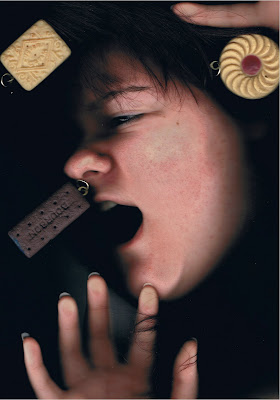
Recently, I discovered the, seemingly little-known, art of scanography. It basically involves scanning your face. In fact, I don't even think you need to scan your face but I'm not sure, I don't really know the specifics of it yet.
Anyway, I've only been trying it out for two days and I'm already addicted to it. I find myself discovering new ways of photography and things related to photography recently and becoming a little bit obsessed with them. First it was freelensing and now this. Who knows what next?
This is perhaps my favourite scanography shot I've taken(?) so far:
And now I have the topic question for my new art project at college, I can actually incorporate scanography into it. The topic is 'collections of everyday objects', which is very broad, I know. But, well, they always are in art. That's one of the best (and sometimes worst) things about it.
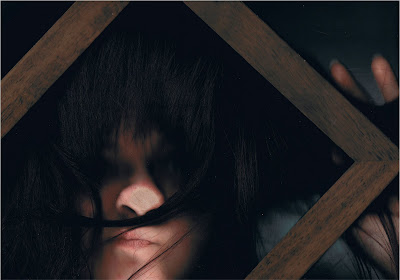
Here are a few other shots I took to link to my art project:
And I'm hoping for plenty more great shots to come. Better shots, fingers crossed.

Saturday, 22 January 2011

Instant Inspiration

So, I know that people find inspiration from all kinds of weird and wonderful things, everything from books and films to a specific location or pet. But there are certain things that spark people's imaginations every time when it comes to photography. Or so I believe. It may not be the case, but there a some things that reoccur in people's photos, ideas that people are constantly re-working, re-using and re-imagining.

For me it's sunsets. I have 30 photos of sunrises and sunsets on flickr and mainly it's because they're easy to access and so many people just let life go by and don't pay the slightest bit of attention to the beauty they can see every day. This offends me.

The possibility of seeing the sun set is the one thing I most look forward to after finishing college (that, and sleeping) and I find it insulting that people can just wander idly by and not even notice the magnificence of nature. And I'm sure other people feel this way about whatever inspires them the most.

Sorry, this post sounds really angry and I don't mean it to. I'm just passionate about what I'm talking about.

On a lighter note, here is yesterday's sunset:

Monday, 17 January 2011

Photo Editing

This is regarding the editing for this photo (because someone on Flickr asked):

Okay. First I took the photo of me 'sleeping' using the self-timer.
The camera needs to be in exactly the same place for all of the photos. It would be extremely helpful if you owned a tripod. I do not. I had to balance my camera on an easel.
Then I sat on a stool on top of my bed and took this part of the photo:
Then stood up and took the rest of them.

I use a free editing software called GIMP to edit my photos. I put the 'sleeping' photo as my base image. Then I put the first of the other images of me on top of it. Then I used the eraser tool at 100% opacity to erase the stool and my legs and most of the background so you can see the base image of me as well. Once I'd done that and the photos looked like just one photo, I used the eraser tool again, but at about 50% opacity and went over the top photo of me.
After that you can anchor the layer down and do the same with each of the photos separately.

After that, I used the equalise tool to adjust the colours and brightness and things.
Taa-daah!

Sunday, 16 January 2011

Inspiration vs. A Good Photo

About 3 months ago I got my first DSLR (he's called Gregory) and have been using him almost every day since then. But I was wondering if there's a strong positive correlation (yeah, I do A-level Statistics) between a photographer's inspiration and the quality of the resulting photo.
Up until recently I didn't get inspired by anything, I just took photos of things I thought looked nice, and my photos were consistently average. Case in point:
But now I've actually got inspiration (which seemed to be the moment I started doing self portraits), my photos appear to be consistently below average. Such as:
However, when I look at other people's photos on Flickr, the photos that were inspired by something or someone- whether that be a friend, a film, a song or just a line of text- tend to be the most interesting shots of theirs.
Is there just a fault in brain that's constantly giving me bad ideas? Or am I just terrible at executing ideas- so bad that I actually execute them? I think I may be the murderer of good ideas.